
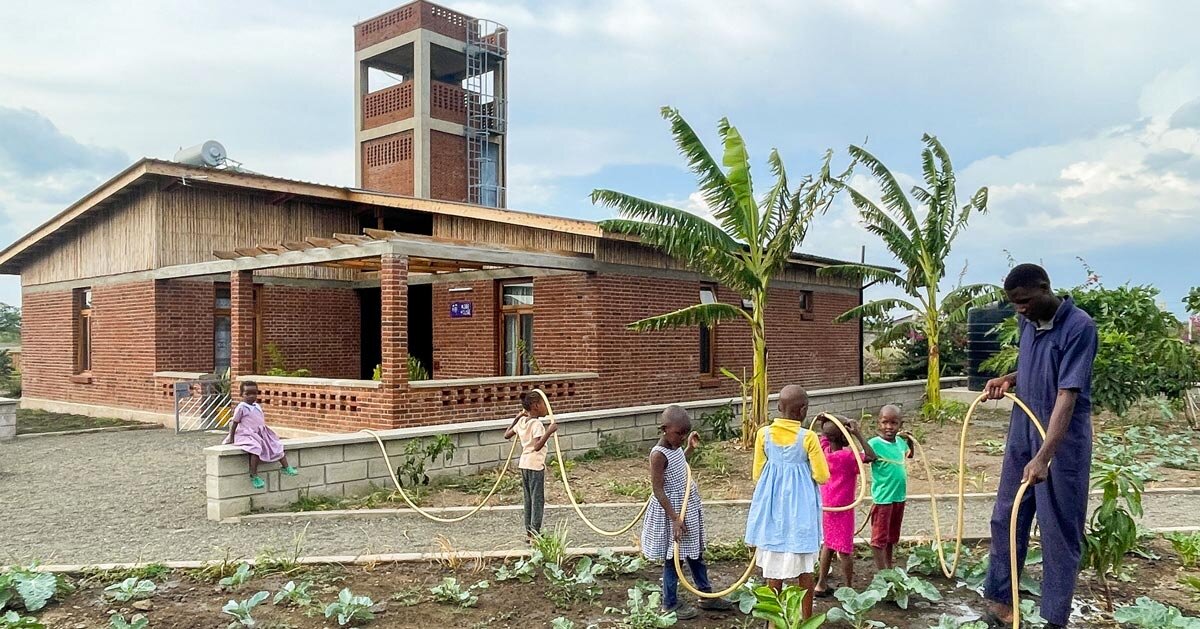

Children’s Village by Article 25 in the Kilimanjaro region
Article 25, in collaboration with Tanzanian partners, has completed Kao La Amani Children’s Village in northern Tanzania. Conceived as a fully off-grid settlement, the project combines family-scale housing with shared learning and recreational facilities, using local materials and renewable energy systems to support long-term operation.
Located in the Kilimanjaro region, where approximately 8% of children are orphaned, the village provides accommodation for 60 children. The masterplan is organized around six domestic-scale cottages, each overseen by a live-in caregiver, and a central social building that accommodates dining, study, games, laundry, and kitchen functions. The spatial arrangement balances private living units with communal areas for education, sport, and play.
all images courtesy of Article 25
Climate-Responsive Architecture Rooted in Local Craft
Humanitarian architecture charity Article 25, joined with Tanzanian partners, centers the masterplan on six domestic-scale cottages. Environmental performance is embedded in the architectural strategy. Generous roof overhangs protect against intense sun and seasonal rainfall, while courtyards and dual- and triple-aspect rooms enable cross-ventilation. A butterfly roof over the dining hall shades adjacent outdoor areas and promotes passive cooling by drawing air through the interior spaces.
Construction prioritizes locally sourced, low-carbon materials and regional craftsmanship. Timber trusses form the primary roof structures, while doors and windows were fabricated on site. Upper wall sections are clad in locally sourced sisal poles, and bricks were fired in nearby kilns using agricultural rice-husk waste. Workshops and full-scale mock-ups supported collaborative refinement of detailing, ensuring accurate execution of passive design elements such as ventilated roof profiles and deep shading devices in a remote setting.
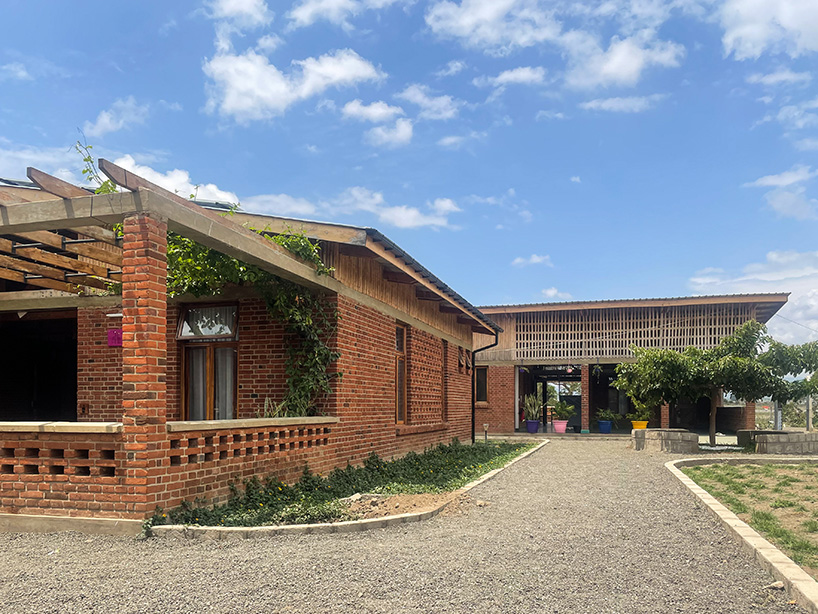
Kao La Amani Children’s Village completed in northern Tanzania
Collaborating with the local Engineering Framework
The village operates independently of national infrastructure networks. Electricity is generated through on-site solar photovoltaic panels; water is drawn from a borehole and heated using solar thermal systems; and wastewater is treated via septic tanks and a constructed wetland. These systems reduce operational costs and support long-term resilience.
Article 25 led architectural design, procurement strategy, and on-site construction management, working closely with Tanzanian architects, engineers, contractors, and craftspeople. Structural engineering was provided by Michael Hadi Associates, building services engineering by Hoare Lea, and civil engineering by WSP, integrating international technical expertise within a locally grounded delivery process.
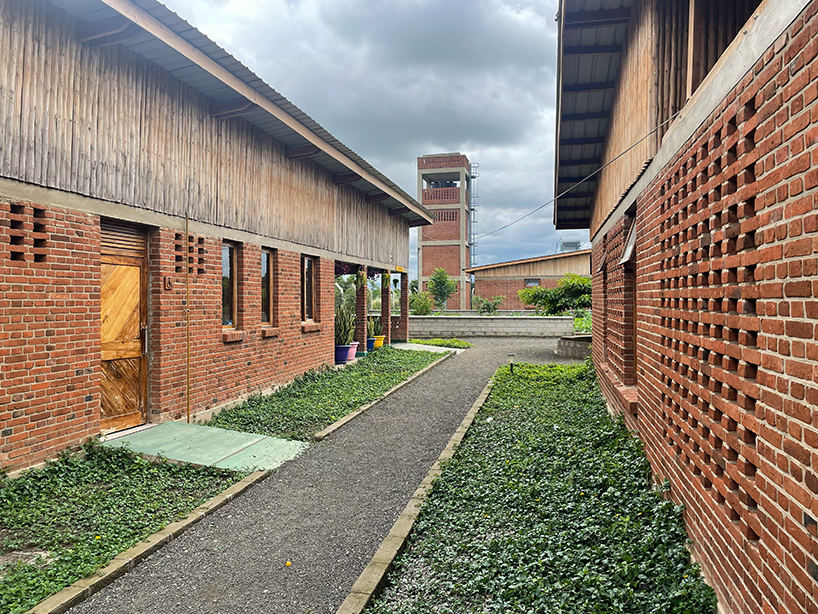
six domestic-scale cottages structure the masterplan
From Play Infrastructure to Educational Expansion
In September 2024, a 30 × 30 meter playground was completed as a co-design initiative with the children and a local maker. The landscape integrates multiple play zones, including rope bridges, swings, sand areas, and timber elements, arranged around two small hills connected by a bridge. Solar lighting enables use after dark, and additional planting and a football pitch are planned.
Phase 1, completed in early 2023, delivered three family cottages and the central social building. Subsequent phases expanded the development to six cottages, staff accommodation, and landscaped outdoor areas, with full completion achieved in March 2025. Future plans include the refurbishment of existing classrooms and the addition of new educational facilities, extending the project’s scope from residential care to long-term learning infrastructure.
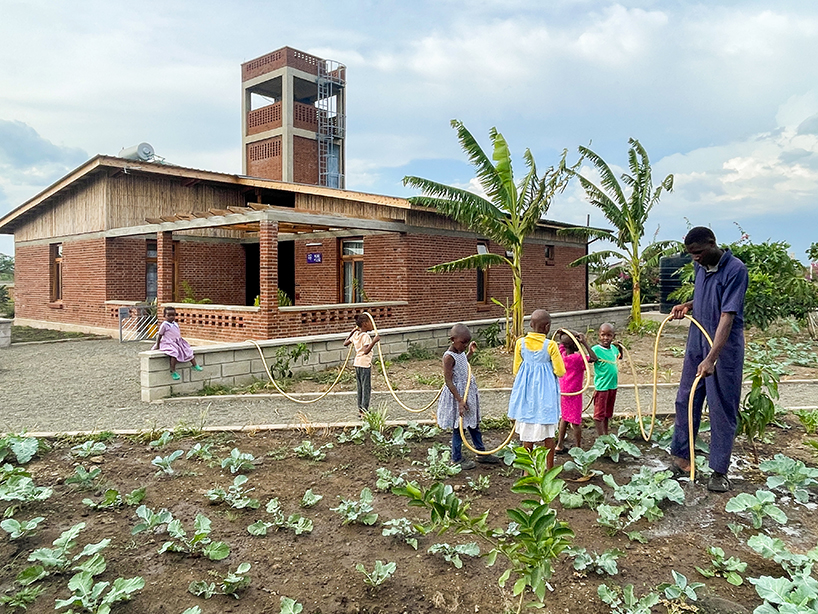
the off-grid settlement combines housing and shared learning spaces