

Architizer is thrilled to announce that the 2026 A+Product Awards is open for submissions! The clock is ticking — get your products in front of the AEC industry’s most renowned designers by submitting today.
In the past couple of decades, “the wall” as a surface has been rather ignored in terms of architectural resolution and interior design. The rise of the open plan space — where circulation was prioritized over enclosure — as well as furniture celebrated as objects that carried spatial identity, led to “the wall” becoming a screen, a background, rather than a tactile surface with material presence. This, in addition to the misapplied legacy of minimalism paired with the need for “Instagrammable” backdrops, encouraged smooth plaster finishes and Farrow & Ball neutrals to become the dominant decoration choices for these vertical surfaces.
And yet, this year’s Product Awards winners display cladding systems and finishes with depth, texture and thickness. It appears that there has been a quiet rebellion amongst architects, who once again elevate the wall into an inhabited element rather than a cosmetic one.
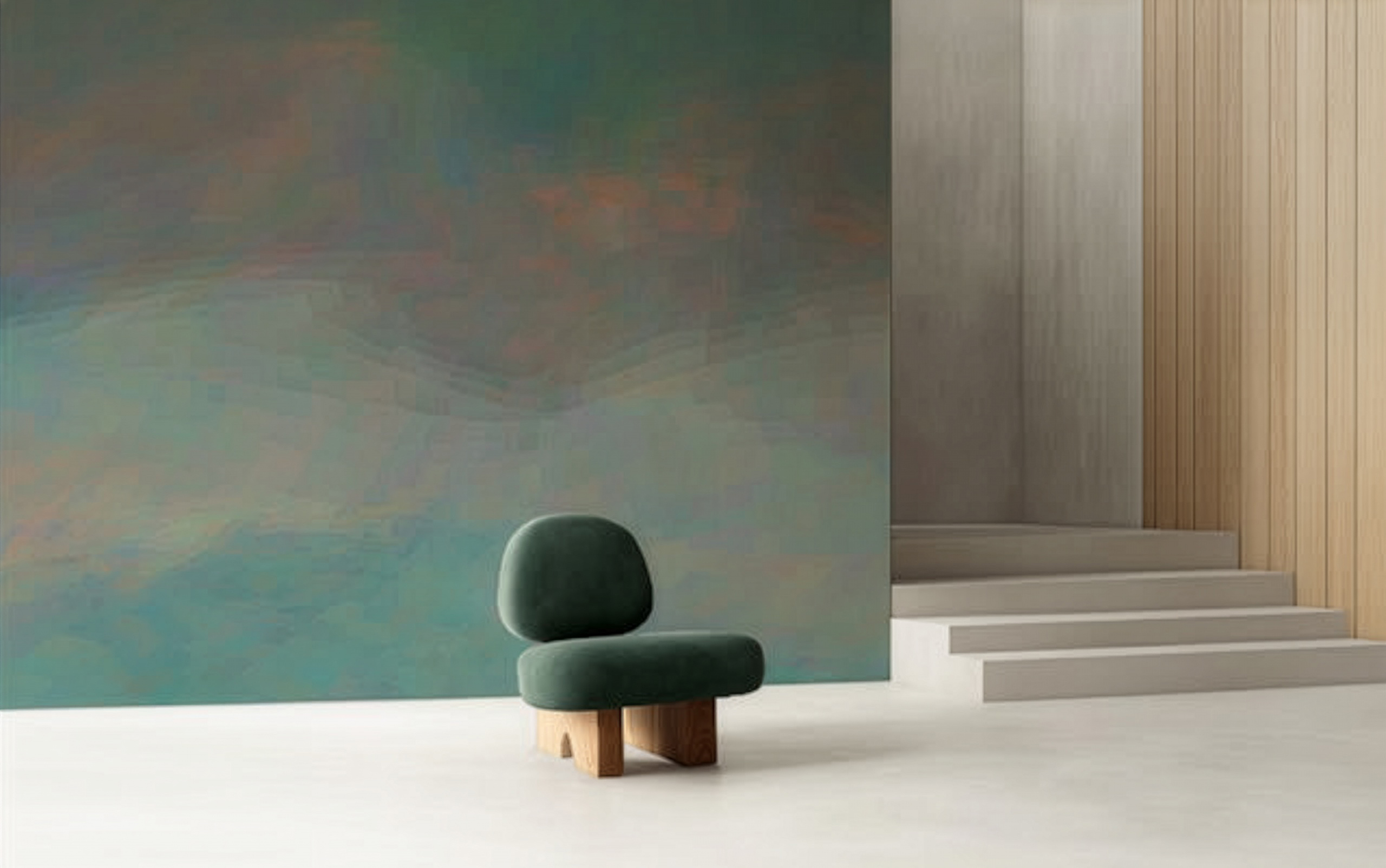
Wanderlust by Jill Malek | Jury Winner, Walls & Wall Coverings, 2025 A+Product Awards
Starting with Wanderlust by Jill Malek, this mural collection draws inspiration from the designer’s travels: the expansive terrains of Iceland, the undulating, glistening mountaintops of Sedona and finally, the endless textures found in the city of Tokyo. The designer introduces the idea of “functional artwork”, i.e., a wall treatment that responds carefully to its context. To be more specific, apart from their conceptual dimension, the murals can be scaled and composed uniquely, tailored to each space, allowing every installation to respond rather than impose a fixed image.
Wanderlust is a characteristic example of a wall finish that resists easy consumption. Even though such murals might steal the spotlight and photograph poorly, they perform well in real space. The mural’s complexity and customizability form a palpable surface, one that changes with light, proximity or movement. In parallel, the specific collection introduces the “return of the hand” — not via a nostalgic reminiscence of craft but as material presence — regardless of whether that presence is achieved through industrial precision or handcrafted processes.
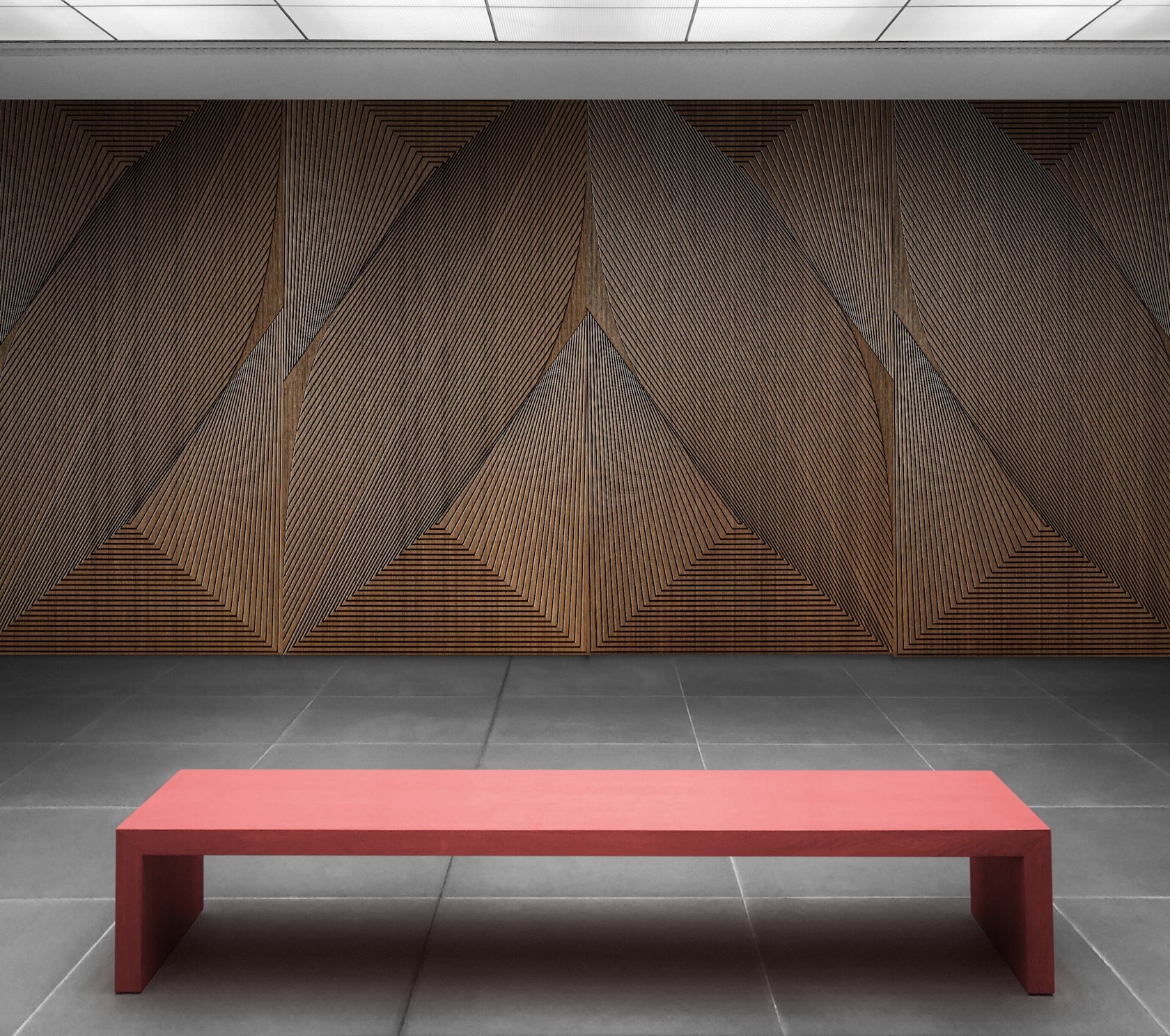
The Pleat&Weave Collection by Plyboo (Smith & Fong) | Popular Choice Winner, Walls & Wall Coverings, 2025 A+Product Awards
In contrast to popular opinion, a flat wall is not sustainable; in fact, such surfaces thrive on disposability. A lightweight plasterboard system, for instance, is easy to install, paint and eventually be replaced, offering ease but at the cost of being environmentally inefficient and heavily consumptive. However, the Pleat&Weave Collection by Plyboo (Smith & Fong) suggests a wall finish that is highly durable and ecologically conscious. The design uses bamboo as the primary material to create panels that balance organic texture with engineered precision. Bamboo lasts longer than most wood-type products, while also being biodegradable and contributing to reducing deforestation.
Nevertheless, the specific product’s advantage is not merely its positive sustainable impact. The patterns etched on the panels are inspired by traditional weaving techniques, featuring chevron motifs and accordion pleats that create spatial narratives and rhythm. These patterns, in combination with the use of natural materials, aim to create environments that trigger positive neuro-aesthetic responses. In doing so, the wall shifts from a passive enclosure to an active sensory and spatial agent, playing with light and texture. It ceases from being just a natural backdrop and becomes a performative interface that delivers a heightened architectural experience.
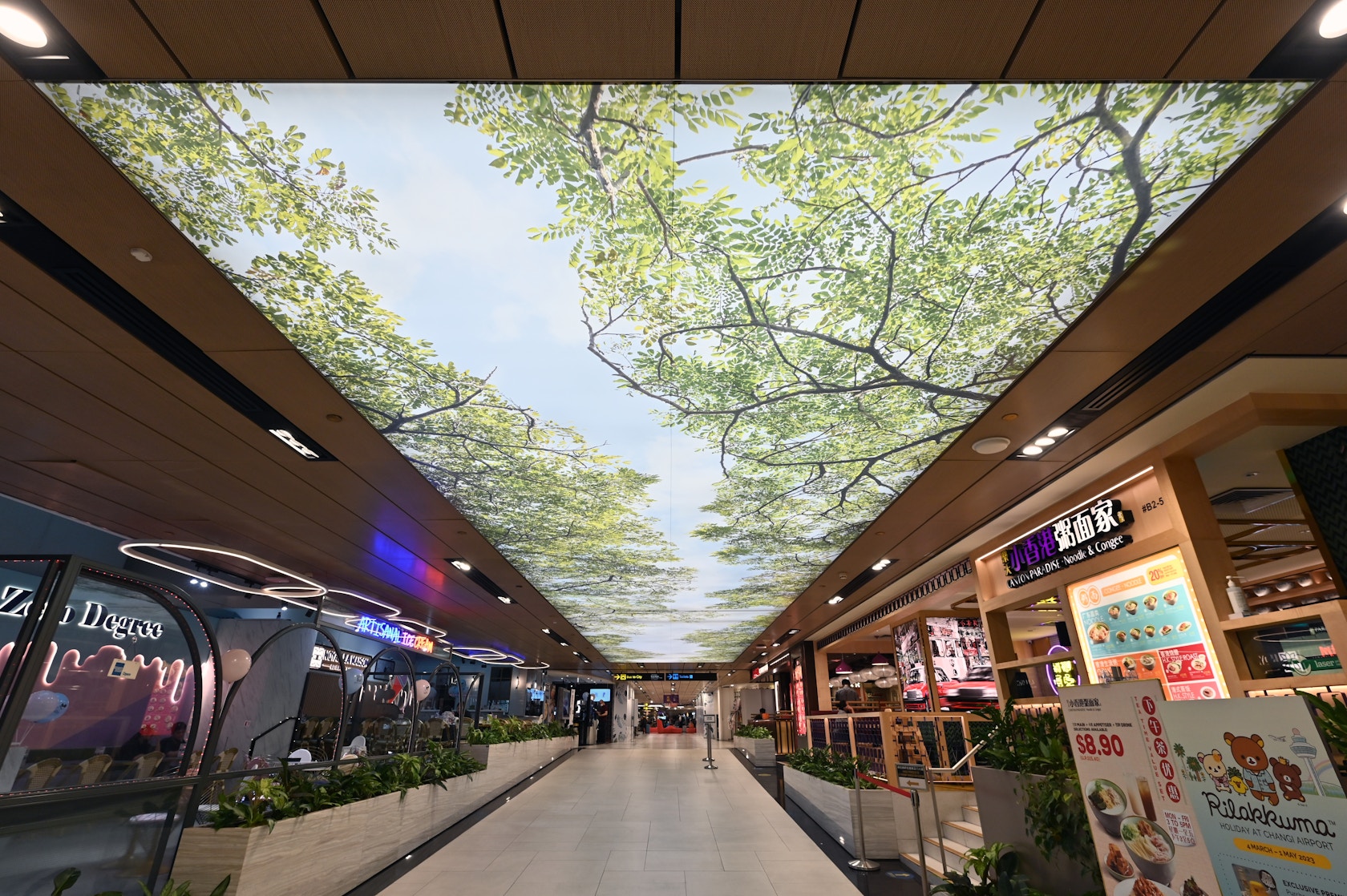
Biowood by BARRISOL | Finalist, Best of the Year – Sustainable Design, 2025 A+Product Awards
Finally, to push against the wall (rather than accept it as a limit), the Biowood product by BARRISOL expands the wall’s role beyond enclosure. The Biowood range features eco-friendly fabrics – upon which any image can be printed – crafted from up to 92% natural ingredients that can dress up various interior surfaces and particularly ceilings. The product can be installed quickly, producing zero debris or dust and can be easily fitted and refitted without damaging the existing structure. However, apart from their durability and eco-friendly composition, these fabrics are equally functional. They are resistant to water and humidity, thus becoming ideal for high-moisture areas such as bathrooms, swimming pools, etc. and have a high fire tolerance. In that sense, the product does not merely operate as decorative cladding but becomes a form of intelligence, functioning in this case, as a barrier for humidity and water.
These three Product Award winners have signaled a growing discomfort regarding interiors that were designed mainly for instant consumption and digital circulation. They advocate for spaces where the surface is transformed once more into a protagonist, not in a stylistic manner but as a performative agent. Consequently, the wall forms relationships between body and movement, light and shadow, architecture and context, becoming materially as well as sensorily activated. Ultimately, the “death of the flat wall” signifies a change in architectural values, where architects shift from visual neutrality into tactile engagement.
Architizer is thrilled to announce that the 2026 A+Product Awards is open for submissions! The clock is ticking — get your products in front of the AEC industry’s most renowned designers by submitting today.
Featured Image: Wanderlust by Jill Malek | Jury Winner, Walls & Wall Coverings, 2025 A+Product Awards